
Bergen is the canonical Norwegian coastal city for long-stay international tourists, with the Bergen Railway, the Bryggen wharf, and the fish market. Ålesund, 200 kilometres to the north, received 657,000 cruise passengers in 2024, making it Norway’s second-busiest cruise port, yet almost all of them leave the same day, and the long-stay international visitor numbers that define Bergen’s reputation simply don’t apply here. Bornholm, a Danish island in the Baltic Sea, recorded 1,691,257 overnight stays in 2024 without producing a single mainstream “Top 10” viral piece. Jokkmokk, a Swedish municipality of roughly 3,000 permanent residents, draws 40,000–48,600 visitors to a single February market weekend and then returns to near-total international silence for the remaining 49 weeks. These three underrated destinations in Scandinavia are not obscure because they lack quality. They are obscure because of geography, language barriers, and a travel media machine that consistently funnels attention to six or seven canonical Scandinavian cities. That gap between objective quality and international visitor numbers is exactly where this article sits.
1. Ålesund, Norway
Why It’s Underrated
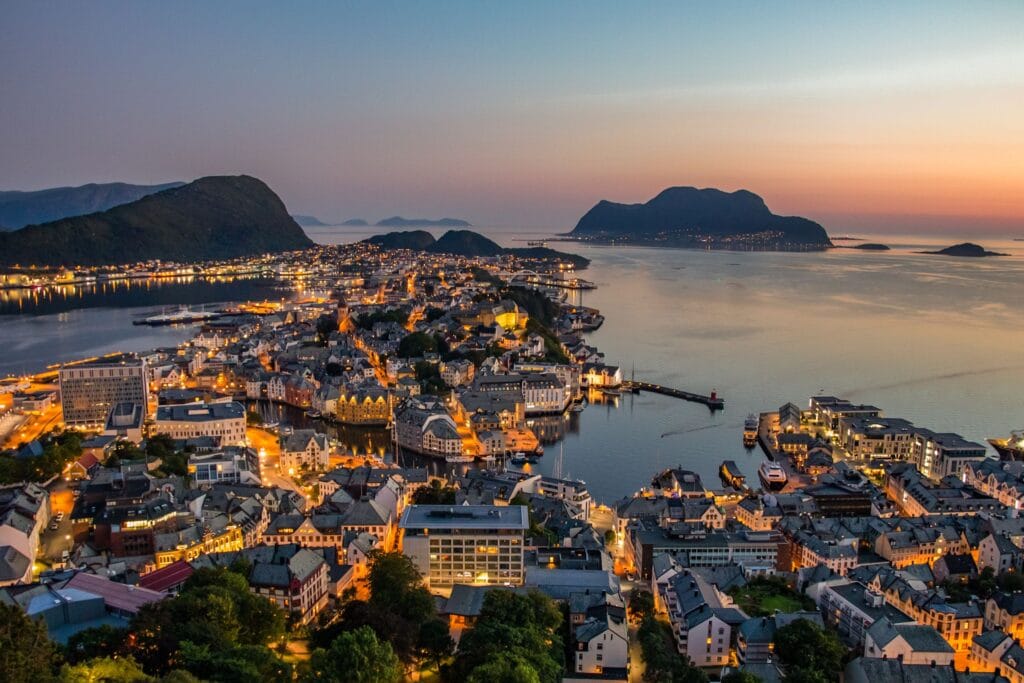
Bergen is the reflex choice for travellers who want “authentic Norwegian coastal towns”, and Bergen is excellent. But Ålesund is its unheralded architectural counterpart. After a catastrophic fire in 1904 destroyed the town centre, Ålesund was rebuilt in three years almost entirely in German Jugendstil (Art Nouveau), resulting in one of the most coherent historic streetscapes in Northern Europe. Despite being Norway’s second-busiest cruise port in 2024 with 290 ship calls and roughly 657,000 cruise passengers, the vast majority of those visitors stay a few hours, then reboard. Long-stay international tourists, people who book flights, sleep in the city, and explore the surrounding archipelago of 80+ islands, remain a small fraction of Bergen’s equivalent numbers. Bergen draws visitors who build full itineraries around it; Ålesund draws visitors who look out a porthole window and leave before dinner.
A secondary reason it stays underrated: most English-language Norway itineraries default to the Oslo–Bergen railway or the Norwegian Scenic Routes around Geiranger, leaving Ålesund in a logistical blind spot unless travellers actively seek it out.
What Makes It Worth the Trip
The Art Nouveau centre is the obvious anchor, but it rewards slow exploration rather than a checklist approach. The Jugendstilsenteret (Art Nouveau Centre), housed in a restored 1907 pharmacy building on Apotekergata, documents the post-fire reconstruction in forensic detail and is open Tuesday–Sunday (currently NOK 150/adult, approximately USD 14). From the museum, a 15-minute walk southeast brings you to Aksla viewpoint, 418 steps from the town centre, where the city’s peninsula layout, surrounded by the Sunnmøre fjords and the open sea, becomes immediately legible. The view is comparable to anything Bergen’s Fløibanen funicular offers, without the funicular queue or the NOK 200 ticket.
The surrounding region, Sunnmøre, is what elevates Ålesund beyond a single-day stop. The ferry from Ålesund to Hareid (30 minutes, around NOK 60) gives access to Hjørundfjord, a narrow, relatively tourist-free fjord that YouTube’s own Norway travel community recommends as an alternative to the over-visited Geirangerfjord. Local boats run from the inner harbour in summer; schedules are posted at the ferry terminal, not always online. The daily fish market at the inner harbour operates mornings from approximately 08:00 and is one of the few remaining genuine working fish markets in western Norway. Clipfish (salted and dried cod, a Norwegian staple) costs roughly NOK 180–220 per kilogram here versus inflated restaurant prices.
Norway is introducing a 3% tourist tax in summer 2026 that will apply to Ålesund accommodation. Budget accordingly: a mid-range hotel room currently runs approximately NOK 1,200–1,800 per night (USD 110–165).
At a Glance
| Detail | Info |
| Best time to visit | May–September for coastal activities; late January–March for quieter streets and winter light |
| Average daily budget | NOK 900–1,800 (USD 85–165) mid-range including accommodation, meals, and one paid attraction |
| Getting there | Ålesund Airport (AES), 15 km from the centre; direct flights from Oslo (SAS, Norwegian, ~55 min); connecting via Oslo from major European hubs |
| Visa requirement | Schengen Area visa (EU/EEA/US/UK citizens visa-free for 90 days) |
| Language | Norwegian; English is widely spoken in tourist areas |
| Currency | Norwegian Krone (NOK); cards accepted almost universally |
| Closest famous alternative | Bergen (200 km south by road; ~4 hrs by bus or ferry connection) |
Getting There: Practically Speaking
Ålesund Airport (IATA: AES) is served by SAS and Norwegian Air with multiple daily departures from Oslo Gardermoen (OSL); flight time is approximately 55 minutes, and fares booked 4–6 weeks ahead regularly appear at NOK 400–700 (USD 37–65) one-way. From Bergen, the most scenic option is the Hurtigruten coastal ferry (approximately 19 hours, calls at multiple ports). A faster land route runs via Route 15 over Strynefjellet, a scenic mountain pass drive of roughly 5–6 hours. Budget travellers can take Vy or Nettbuss express services from Bergen or Trondheim; journey time from Bergen is approximately 6–7 hours and costs around NOK 250–450.
From Ålesund Airport to the city centre, the Flybussen airport bus takes approximately 25 minutes and costs NOK 139 each way. Taxis run NOK 300–400 for the same journey.
Where to Stay & What It Costs
Budget: Ålesund Vandrerhjem (HI-affiliated hostel), centrally located near the harbour. Dorm beds from NOK 350 (USD 32); private rooms from NOK 750 (USD 69).
Mid-range: Hotel Brosundet, a converted warehouse on the canal with Art Nouveau architectural details retained. Doubles typically cost NOK 1,400–2,200 (USD 130–200) in peak summer. This property is frequently cited in Norwegian travel media as the most atmospheric stay in the city.
Splurge: Storfjord Hotel (technically in nearby Ørskog, 45 minutes by car): eco-certified, wooden lodge architecture, doubles from NOK 3,500 (USD 320). Worth the distance for travellers combining Ålesund with the Sunnmøre Alps.
One Insider Tip
The tourist boats to the Geirangerfjord from Ålesund run only in summer and typically sell out by 10:00 AM on peak days. Book the first departure of the day (usually 07:30 from the inner harbour ferry terminal), not the 09:00 or 10:00 sailings that appear first in Google results. At the 07:30 departure, you will reach the fjord before the cruise ships from Geiranger village are unloading, which makes the difference between a quiet fjord and a floating traffic jam.
2. Bornholm, Denmark
Why It’s Underrated
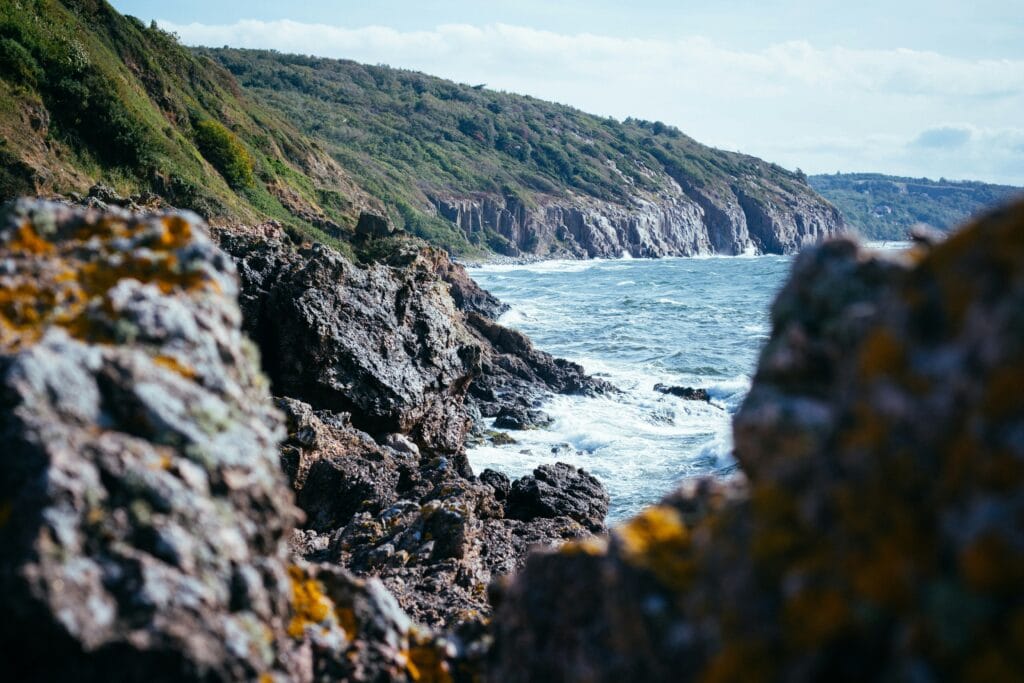
Copenhagen pulls approximately 10 million overnight stays annually, making it one of Northern Europe’s most visited cities. Bornholm, a 588 km² Danish island in the Baltic Sea, sits 200 kilometres east of Copenhagen and recorded 1,691,257 total overnight stays in 2024, roughly a sixth of the capital’s numbers, despite having warm summers, sea cliffs, medieval round churches, and a food scene that produced Denmark’s first Michelin-starred restaurant outside Copenhagen (Kadeau, since relocated to the capital, originated on the island). The obstacle is entirely logistical: reaching Bornholm requires either a ferry or a domestic flight, adding a layer of planning friction that most visitors to Denmark skip. The result is an island with Baltic sun totals that rival parts of southern Germany and a tourism infrastructure calibrated to Danish domestic tourists, which keeps international visitor rates and prices low.
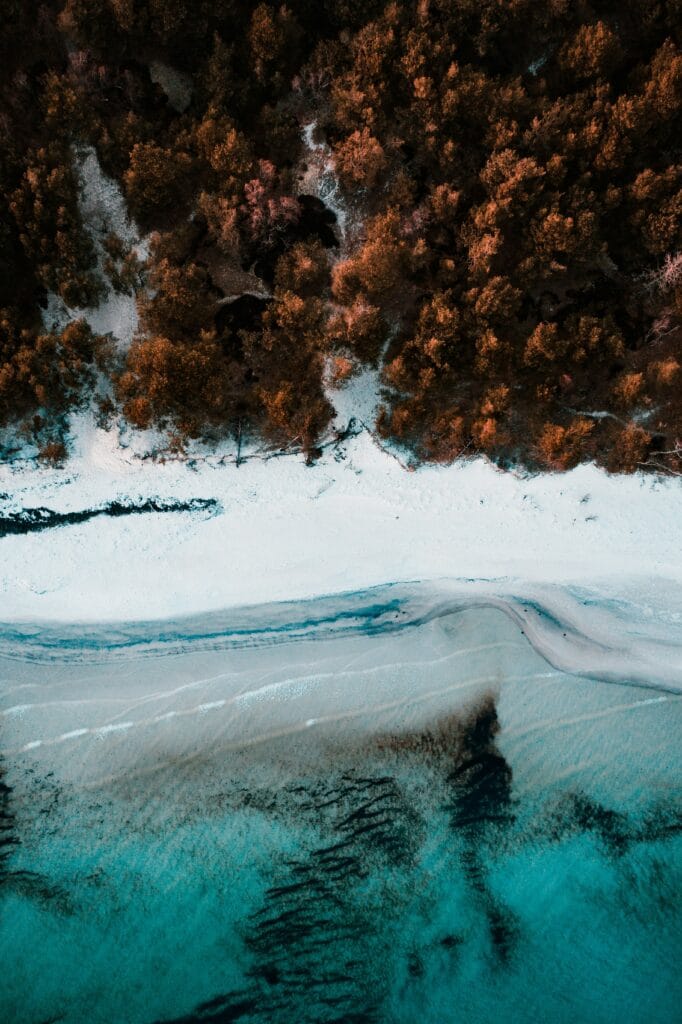
The island is gaining off-season traction: Destination Bornholm reported 2024 data showing growth in overseas overnight stays and increasing interest from non-core markets, which suggests the current window of low international attention is narrowing.
What Makes It Worth the Trip
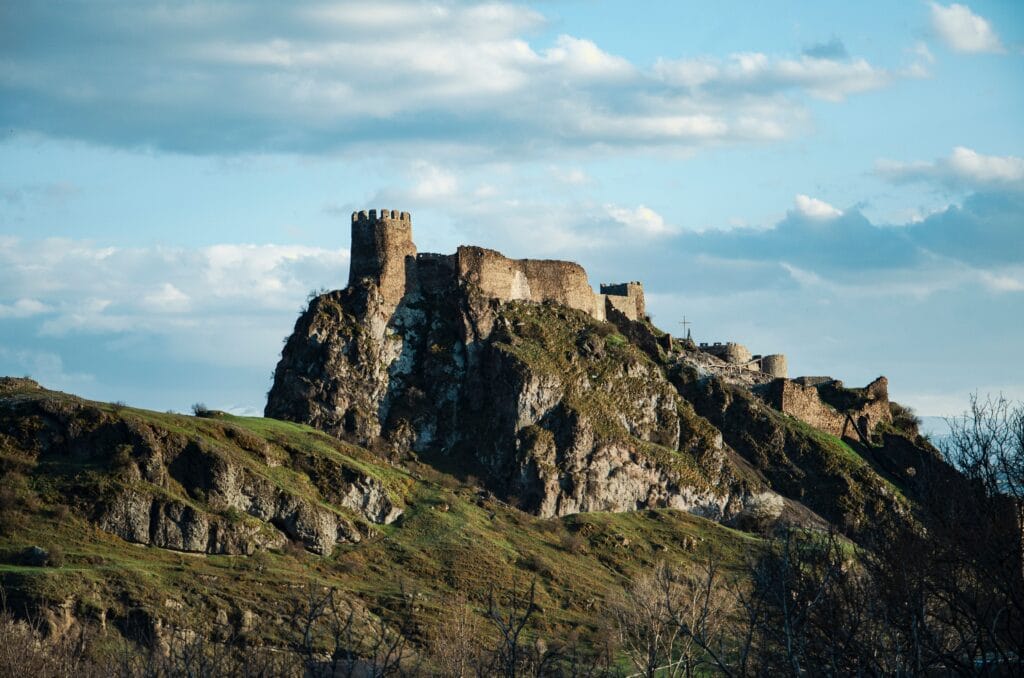
The clearest argument for Bornholm is the Hammershus fortress, the largest medieval castle ruin in Scandinavia, sitting on a basalt cliff 74 metres above the sea at the island’s northwest tip. Admission is free; the site is accessible year-round. Most visitors to Denmark never get here, despite Hammershus being larger and more dramatic than many of the Rhineland castle ruins that attract coachloads of tourists in Germany. The site draws roughly 300,000 visitors annually, a respectable number by Bornholm standards but negligible by European heritage-tourism benchmarks.
Bornholm’s interior is dominated by the Almindingen forest, the third-largest in Denmark, with well-marked cycling trails. The island’s cycling infrastructure is exceptional by any standard: approximately 235 km of marked routes, an official cycle-hire network, and a culture where locals genuinely use bikes as primary transport. The standard tourist loop of the island by bike takes two to three days and costs essentially nothing beyond food and accommodation. Rønneby Røgeri and other traditional smoke houses (røgerier) in Hasle and Svaneke sell smoked herring directly from the smokehouse for DKK 20–35 per portion (USD 3–5), a functional lunch that also functions as an accurate introduction to the island’s culinary identity.
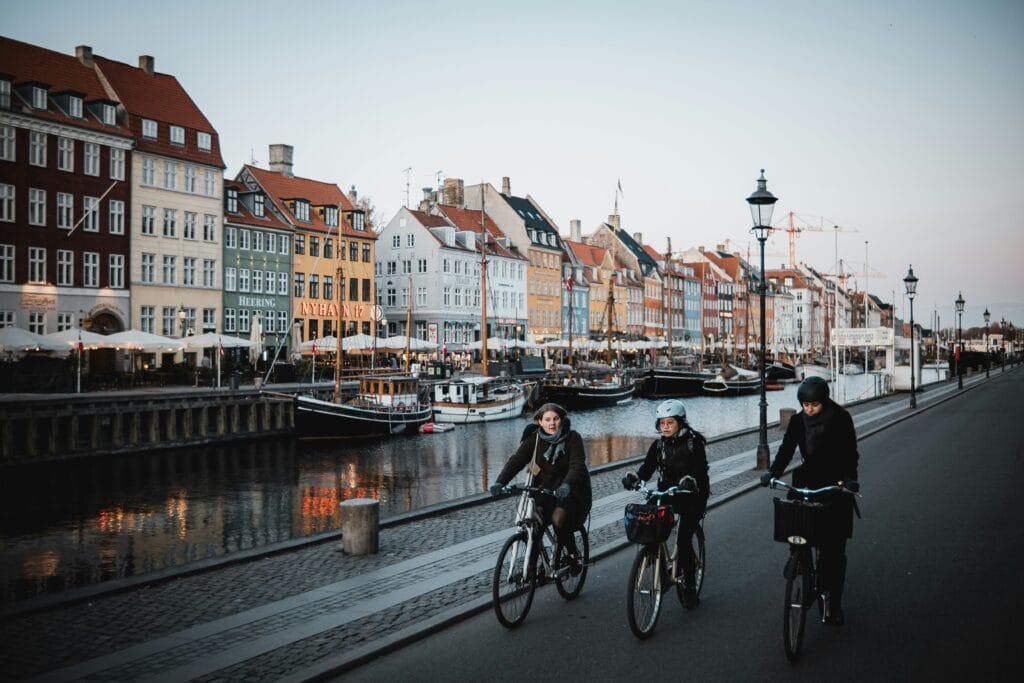
The island’s artisan food scene deserves specific mention: Bornholm produces its own cheeses (primarily from Thise and Bornholms Andelsmejeri), ice cream, chocolates, and ceramics that appear in Copenhagen’s high-end restaurants but are cheaper at source. The weekly farmers’ market in Gudhjem (Thursdays in season, roughly May–September) is the most direct access point.
At a Glance
| Detail | Info |
| Best time to visit | June–August for swimming and cycling; May and September for fewer Danish domestic tourists |
| Average daily budget | DKK 600–1,000 (USD 85–145) mid-range including accommodation, meals, and transport |
| Getting there | Ferry from Køge (south of Copenhagen) via BornholmerFærgen: ~5.5 hrs; or DAX/Danish Air Transport flights from Copenhagen, ~35 min |
| Visa requirement | Schengen Area (EU/EEA/US/UK citizens visa-free) |
| Language | Danish; English is widely spoken |
| Currency | Danish Krone (DKK); cards accepted universally |
| Closest famous alternative | Copenhagen (approx. 2 hrs by air or 5.5 hrs by overnight ferry) |
Getting There: Practically Speaking
The primary ferry route is operated by BornholmerFærgen from Køge harbour (approximately 40 km south of Copenhagen, accessible by S-train from Central Station in 40 minutes). The overnight ferry departs Køge at approximately 23:00 and arrives in Rønne at 05:45, an efficient option since it eliminates one night’s accommodation cost. A passenger ticket costs approximately DKK 250–350 (USD 36–50) one-way; cabins are available from DKK 450 (USD 65). A car crossing costs approximately DKK 700–1,000 depending on the season.
The faster option is flying: DAX (Danish Air Transport) operates routes from Copenhagen Airport (CPH) to Bornholm Airport (RNN) in approximately 35 minutes. Return fares as low as DKK 600–900 (USD 87–130) are available with advance booking. Rønne, the island’s main town and ferry port, is 10 minutes by taxi or local bus from the airport.
Where to Stay & What It Costs
Budget: Danhostel Rønne, a well-maintained HI hostel in the island’s main town. Dorm beds from DKK 250 (USD 36); private rooms from DKK 550 (USD 80).
Mid-range: Stammershalle Badehotel, a classic Danish badehotel (bathing hotel) on the north coast near Gudhjem. Doubles from DKK 1,200–1,800 (USD 175–260) in July; significantly cheaper in May and September. Sea views, traditional Danish breakfast included.
Splurge: Hotel Griffen Spa, Rønne, the island’s most modern full-service hotel with spa facilities. Doubles from DKK 2,200–3,000 (USD 320–435) in peak season.
One Insider Tip
Bornholm’s most visited attraction, Hammershus, is almost entirely crowd-free before 09:30. The site opens at dawn, and the first tour buses from Rønne do not arrive until approximately 10:00. Drive or cycle there for 08:00, and you will have the largest medieval castle ruin in Scandinavia to yourself for at least an hour. After 11:00 in July and August, the car park is full, and the viewing terraces become congested. The same logic applies to the Ertholmene island group (Christiansø): the only daily boat departs Gudhjem at 10:00, so booking the first available date prevents the trip from selling out; there is a single boat, no alternatives, and it fills fast in peak weeks.
3. Jokkmokk, Sweden
Why It’s Underrated
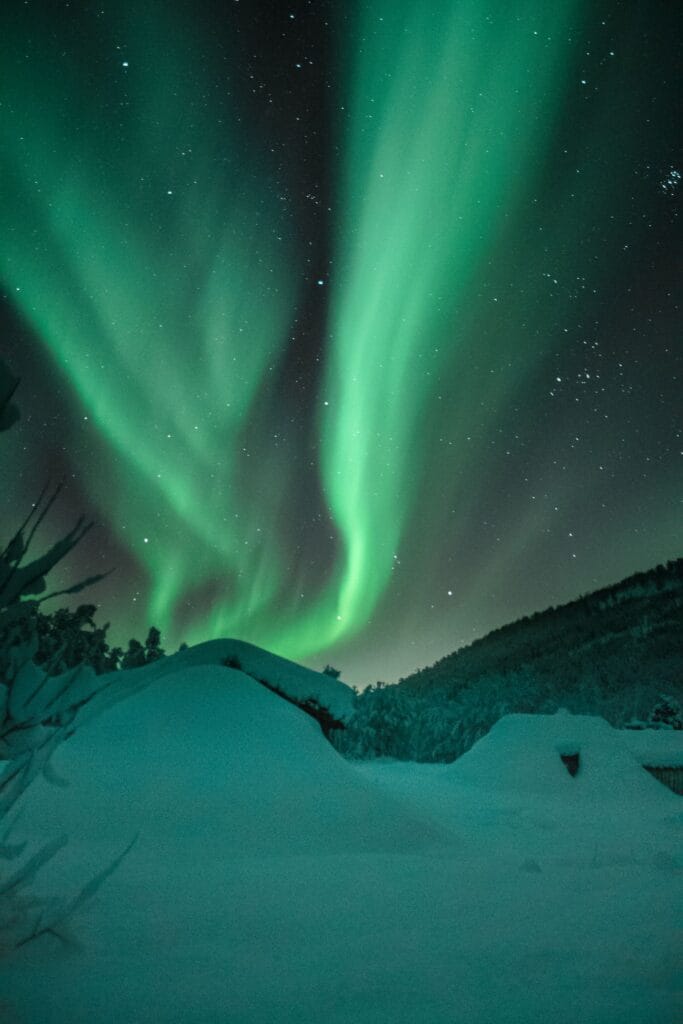
Lapland travel from the English-speaking world routes almost exclusively through Rovaniemi in Finnish Lapland, Santa Claus Village, the Arctic Circle certificate, and the Christmas product. Rovaniemi received approximately 700,000 tourists in 2023, up sharply from pre-pandemic levels, with a tourism infrastructure priced accordingly. Jokkmokk, the Sami cultural centre 90 km south of the Arctic Circle in Swedish Lapland, is a municipality of approximately 3,000 permanent residents that has no Santa product, no Christmas marketing machine, and no equivalent English-language press footprint. It is home to Ájtte, the Swedish Mountain and Sami Museum, which is the primary national institution for Sami heritage; to the 400-year-old winter market that draws 40,000–48,600 visitors for three days each February; and to the Laponia World Heritage Area, a UNESCO-listed wilderness of 9,400 km² that is among the largest protected areas in Europe. None of this appears in the mainstream travel conversation about Scandinavia.
The region of Norrbotten, in which Jokkmokk sits, recorded its third consecutive record year for tourism in 2024, driven largely by Swedish domestic and Scandinavian regional visitors, not the international market. That gap is precisely the underrating signal: the destination is objectively growing in visitor interest from people who actually know about it, while remaining invisible to most international travellers who default to Finnish Lapland or Norwegian fjords.
What Makes It Worth the Trip
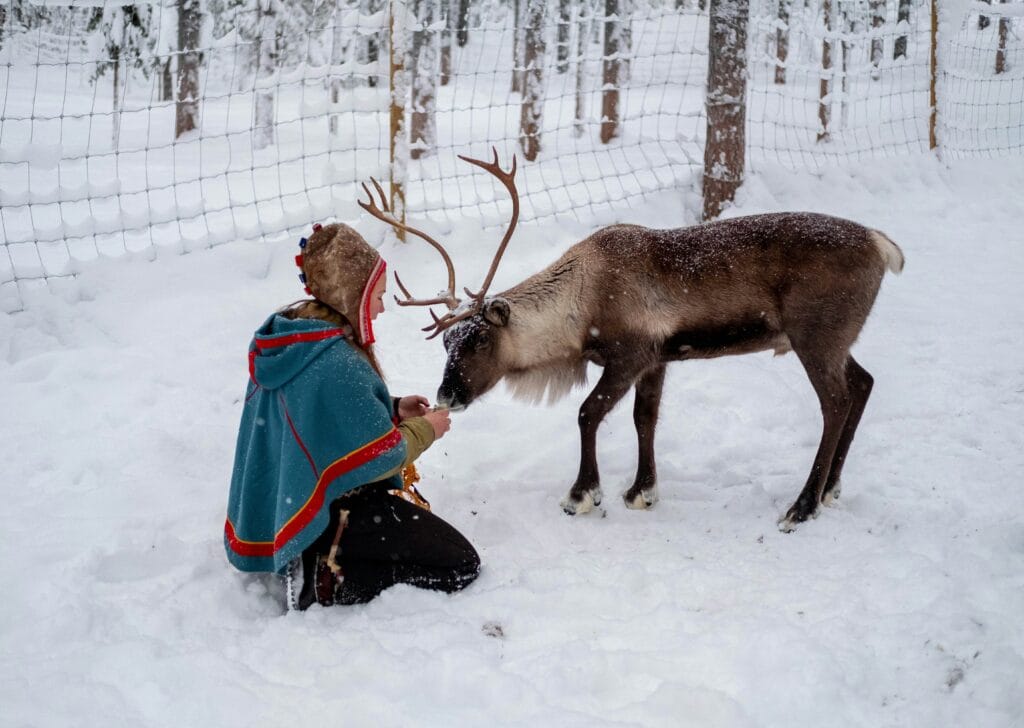
Ájtte (the Swedish Mountain and Sami Museum) on Kyrkogatan in central Jokkmokk is the most comprehensive institutional introduction to Sami culture and sub-Arctic ecology in Scandinavia. It is open year-round, with extended summer hours (typically 10:00–17:00 in peak season), and admission is approximately SEK 120 (USD 11) for adults. The permanent exhibition covers Sami material culture, reindeer herding practices, and the political and legal history of Sami rights in Scandinavia, a context that makes the broader landscape legible in a way that most “Lapland experience” tourism products don’t attempt.
The Laponia World Heritage Area surrounds the municipality and encompasses four national parks: Sarek, Muddus, Padjelanta, and Sjaunja. Sarek specifically is one of Europe’s last true wilderness parks, with no maintained trails, no tourist infrastructure, and no cabins, and draws experienced trekkers and wilderness travellers rather than general tourists. The standard entry point is the village of Kvikkjokk, accessible by local bus from Jokkmokk (approximately 95 km, roughly 2 hours). The summer trekking window runs mid-June through early September; mosquitoes are aggressive in July, which many guides note as the honest caveat for anyone planning a multi-day wilderness route.
The Jokkmokk Winter Market (Jokkmokks marknad) is a genuinely unique event with a specific logistical profile that distinguishes it from “artisan market” experiences elsewhere in Scandinavia. Running since 1605, it operates for three days on the first Thursday–Saturday of February, drawing Sami craftspeople (duodjiarists), reindeer racers, and traders from across Scandinavia and northern Finland. Accommodation in Jokkmokk itself books out months in advance for market week; the surrounding region’s cabins and guesthouses are the only realistic option if you haven’t booked by November of the preceding year.
At a Glance
| Detail | Info |
| Best time to visit | February (Winter Market, Northern Lights); June–August (midnight sun, Laponia trekking); March–April for snow activities without peak crowd |
| Average daily budget | SEK 800–1,400 (USD 75–130) including accommodation, meals, and one guided activity |
| Getting there | Fly to Luleå (LLA) or Gällivare (GEV) and take the Inlandsbanan train or regional bus to Jokkmokk; Luleå to Jokkmokk is approximately 3 hrs by bus |
| Visa requirement | Schengen Area (EU/EEA/US/UK citizens visa-free) |
| Language | Swedish; English spoken in tourism services; basic Sami signage in some public spaces |
| Currency | Swedish Krona (SEK); cards accepted; some small market vendors prefer cash |
| Closest famous alternative | Rovaniemi, Finland (approx. 300 km east; Finnish Lapland tourism hub) |
Getting There: Practically Speaking
The most practical air gateway is Luleå Airport (IATA: LLA), served by SAS and BRA (Braathens Regional Airlines) from Stockholm Arlanda (ARN), with multiple daily departures; flight time is approximately 1 hour 25 minutes, and fares booked in advance start around SEK 600–1,000 (USD 56–93) one-way. An alternative entry is Gällivare Airport (GEV), closer to Jokkmokk at approximately 100 km north, with connecting flights from Stockholm via Umeå.
From Luleå, regional bus Line 45 (operated by Länstrafiken Norrbotten) runs to Jokkmokk in approximately 3 hours; the fare is approximately SEK 200–280 (USD 19–26). The Inlandsbanan, a heritage railway running through central Sweden from Mora to Gällivare, passes through Jokkmokk in summer (June–August). The route from Östersund takes about 13 hours and is a scenic journey rather than a fast transit option, but relevant for travellers combining Jokkmokk with central Sweden.
Where to Stay & What It Costs
Budget: Jokkmokk Vandrarhem & Camping, on the Lilla Luleälven river edge. Dorm beds from SEK 320 (USD 30); private cabin rooms from SEK 680 (USD 63). Directly on a cycling and skiing trail network.
Mid-range: Hotel Akerlund, the primary hotel in central Jokkmokk, family-run, with standard doubles from SEK 1,100–1,600 (USD 103–150). Breakfast is included in most rates; the kitchen serves traditional northern Swedish dishes including renstek (reindeer steak) at approximately SEK 220–280 (USD 20–26).
Splurge: Camp Ripan in nearby Kiruna (2 hours north by bus) offers Aurora cabins with glass ceilings specifically designed for Northern Lights viewing, from approximately SEK 3,800–5,500 (USD 355–515) per night, the most architecturally specific accommodation option in the wider region if Jokkmokk’s options are full during market season.
One Insider Tip
The Jokkmokk Winter Market’s main sales area closes at 18:00 each day, but Sami craftspeople (duodjiarists) who sell from their own tents and vehicles, not the official market stalls, continue selling informally until approximately 20:00 on Thursday and Friday evenings. These sellers carry handmade knives (knivar), leather goods, and silverwork that do not appear in the official market stalls. Walk the parking areas along Road 97 after 18:00 on market days; this is where the most skilled craftspeople sell directly, often at prices 20–30% lower than the stalls inside the main market fence.
How to Choose Between These 3 Destinations
| If you want… | Best choice |
| The lowest budget option | Jokkmokk (SEK-denominated; accommodation and food are the cheapest of the three) |
| Easiest to reach from Europe | Bornholm (35-minute flight from Copenhagen, or overnight ferry) |
| Best food scene | Bornholm (artisan producers, smoked herring culture, Michelin-pedigree ingredients) |
| Fewest tourists | Jokkmokk (outside of February market week, near-zero international visitor traffic) |
| Most outdoor activities | Ålesund (fjords, archipelago kayaking, Sunnmøre Alps hiking, coastal cycling) |
| Best for a long weekend | Ålesund (compact city, direct flights from Oslo, high density of things per km²) |
All three destinations are currently affordable relative to their Scandinavian counterparts; Oslo, Bergen, and Copenhagen each carry significantly higher daily costs. Bornholm is the most balanced choice for first-time visitors who want a short, self-contained trip without long transit legs. Jokkmokk requires the most planning (particularly for February market week) but delivers the most genuinely distinctive cultural experience of the three.
Frequently Asked Questions
Ålesund received approximately 657,000 cruise passengers in 2024, making it Norway’s second-busiest cruise port. However, cruise passengers are predominantly same-day visitors who disembark for three to five hours and leave. The number of travellers who fly in, stay multiple nights, and explore the Sunnmøre archipelago is far lower. The cruise traffic creates a surface impression of popularity without producing the sustained visitor economy of a destination like Bergen. Travellers who stay overnight will find accommodation availability, restaurant capacity, and viewpoints far less congested than cruise day-count figures suggest.
Within Denmark, Bornholm is known for its Baltic Sea island character, the highest annual sunshine hours in the country, its round churches (rundekirker — four medieval fortified churches unique in Scandinavia), smoked herring, and artisan food production. Internationally, it is almost unknown. The island contributed to Denmark’s culinary reputation through the original Kadeau restaurant, which developed Nordic food techniques there before its Copenhagen iteration earned Michelin recognition. It is also the filming location for the Danish crime television series “The Eagle,” which brought modest Scandinavian-market attention to the island’s landscape.
Jokkmokk is one of the most significant Sami cultural centres in Sweden. It hosts Ájtte, the primary national museum for Sami heritage and mountain ecology, and the Jokkmokk Winter Market, which has run continuously since 1605 and remains the most important annual gathering for Sami craftspeople, traders, and communities across northern Scandinavia. The municipality falls within the traditional Sami territory of Lule Sápmi. Unlike tourist products in Finnish Lapland that present Sami culture through a commercial lens, Jokkmokk’s institutions are managed with direct Sami community input.
Combining all three in a single trip is logistically possible but requires 12–16 days and a willingness to fly between three separate countries. A practical route would be: Copenhagen → Bornholm (3–4 days) → Oslo → Ålesund (3–4 days) → Stockholm → Luleå → Jokkmokk (3–4 days). The distances make overland travel between Bornholm and the other two destinations impractical. If time is limited to 7–10 days, choose one or at most two destinations and go deeper rather than wider.
All three are family-appropriate, with different strengths. Bornholm is the most child-friendly: safe cycling infrastructure, sandy beaches on the south coast, and the Bornholms Museum in Rønne with interactive exhibits. Ålesund works well for families interested in coastal and fjord activities, with boat tours and the Atlanterhavsparken (Atlantic Sea Park), one of Norway’s largest aquariums, located 3 km from the city centre. Jokkmokk is best suited to older children interested in outdoor activities or cultural education; the February market is a memorable experience for children but requires tolerance for cold (temperatures regularly reach −15°C to −25°C during market week).
For Ålesund, a car is helpful for day trips to Hjørundfjord and the Sunnmøre Alps, but the city itself is fully walkable, and the inner harbour ferry network covers most key stops. For Bornholm, the island’s bus network (BAT — Bornholms Amts Trafikselskab) covers main towns and attractions, and cycling makes a car unnecessary for most visits. For Jokkmokk, a car is useful for accessing Laponia trailheads and Kvikkjokk but not strictly essential if you are based in town and using regional bus services. None of the three destinations requires a car for a satisfying visit.
May and early September are consistently the best shoulder months for all three destinations. SAS Travel Trends 2026 data confirms that summer 2025 set records for overnight stays across Norway, Sweden, and Denmark, with peak pressure in July and August. May offers viable weather (especially in Ålesund and Bornholm), lower prices, and meaningfully smaller crowds. Jokkmokk is an exception: February’s Winter Market is the single most internationally significant event, and September offers the best wilderness trekking window in Laponia.
Norway’s 3% accommodation tax, being introduced in summer 2026, will add a small amount to hotel costs in Ålesund. On a NOK 1,500/night hotel room, this represents approximately NOK 45 (USD 4) per night meaningful over a week’s stay but not a trip-defining cost increase. The tax applies only to accommodation and cruise arrivals in participating municipalities; food, transport, and attractions are unaffected. Sweden and Denmark have no comparable national accommodation tax at the time of writing.
Jokkmokk is generally the least expensive, largely because it lacks the premium hotel and restaurant layer that builds up in more internationally recognized destinations. A mid-range day in Jokkmokk (accommodation, meals, one activity) runs approximately SEK 800–1,100 (USD 75–103). Bornholm is similarly affordable by Scandinavian standards, particularly outside July: DKK 600–900 (USD 87–130) daily mid-range is realistic. Ålesund is the most expensive of the three, in line with Norway’s general cost level: NOK 1,200–1,800 (USD 110–165) per day is a reasonable planning figure. All three are cheaper than Oslo, Bergen, Stockholm’s city centre, or Copenhagen.
Yes, in all practical travel contexts. In Ålesund, English is spoken at hotels, restaurants, museums, and tourist offices without exception. In Bornholm, English proficiency is high across the island, including at smaller accommodation providers and the ferry terminal. In Jokkmokk, English is spoken in tourism-facing businesses; however, some smaller market vendors during the February event may speak primarily Swedish or Sami languages. Having a translation app available for the market weekend is a practical precaution, though not a significant barrier.
Research & Verification Note
Part 1, Selection methodology and verification:
Destinations were selected against the Space brief’s underrating criteria: low international visitor volume relative to qualitative merit, the presence of a named famous alternative that travellers default to instead, and minimal coverage in major English-language travel media in the 24 months prior to publication. Ålesund was chosen over Tromsø and Trondheim because its cruise-inflated visitor counts obscure the low long-stay international numbers. Bornholm was chosen because its 1.69 million overnight stays are overwhelmingly domestic Danish and regional Scandinavian, not international. Jokkmokk was chosen because despite Norrbotten recording three consecutive record tourism years, the municipality itself remains almost entirely absent from international Scandinavia travel content. All pricing figures, transport times, and institutional details should be verified by the writer before publication; Norway’s 2026 tourist tax in particular is a recent policy change with municipal variation. Readers are instructed to confirm current prices, transport schedules, and accommodation availability directly with providers before travel.
Part 2, Sources Used:
- Sentrumsforening.no , Ålesund cruise season 2025 data , used for Ålesund cruise passenger figures (2024/2025)
- CruiseToTravel.com , Norway’s 2026 Tourist Tax , used for tourist tax details and cruise comparison
- Kystverket.no , Cruise Traffic 2024 , used for national cruise passenger statistics
- Bornholm.info , Overnight stays 2024 , used for Bornholm overnight stay figures
- TheHanseatic.com , Bornholm off-season tourism 2024 , used for Bornholm international visitor growth context
- VisitBornholm.com , used for island geography and sunshine data
- Jokkmokks marknad , FAQ , used for Winter Market visitor numbers and logistics
- ArcticSwedenVisitorsBoard.com , Jokkmokk cultural tourism , used for Ájtte museum description and Sami cultural context
- ArcticSwedenVisitorsBoard.com , Norrbotten record tourism year , used for Norrbotten regional tourism growth data
- DiVA Portal , Winter Festival in Jokkmokk (academic) , used for Jokkmokk town population reference
Part 3 , Additional Sources for Trip Planning:
- Ålesund: Visit Norway , Ålesund | Ålesund Airport (Avinor) | Norway Visa Info
- Bornholm: Destination Bornholm (official) | BornholmerFærgen ferry operator | DAX flights | Denmark Visa requirements
- Jokkmokk: Jokkmokk Infocenter | Ájtte Museum | Länstrafiken Norrbotten (bus routes) | Laponia World Heritage Area | Sweden Visa Info , Schengen