
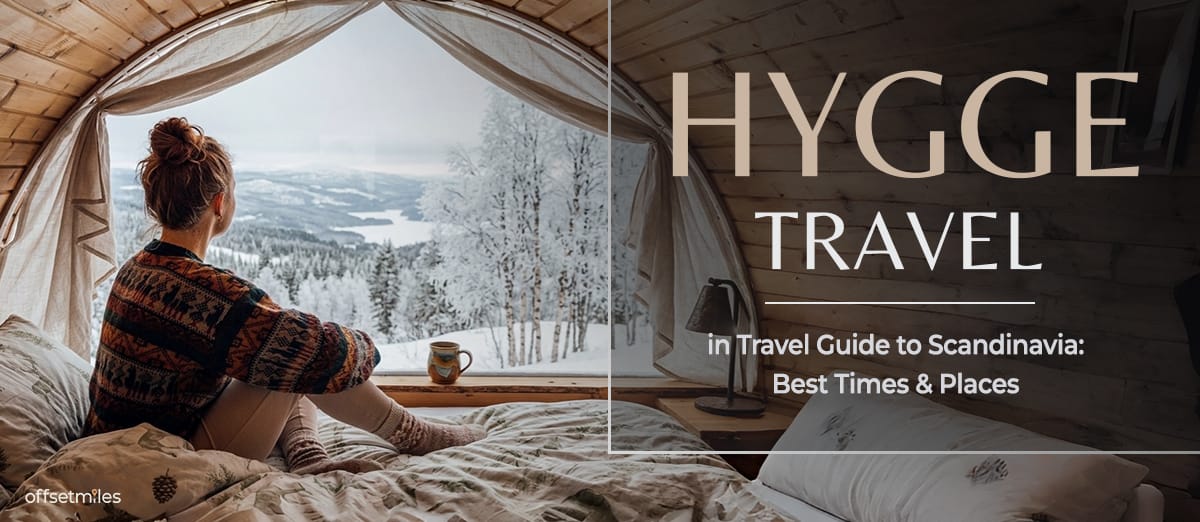
This hygge travel guide starts with one useful number: 68% of Copenhagen’s hotel rooms already hold an eco-certification: Green Key, ISO 14001, or the Nordic Swan Ecolabel. That changes how you plan the trip before you’ve looked at a single flight.
You can move around the city without taxis, book a verified low-impact stay, and still keep the warm, candlelit, unhurried mood that hygge is supposed to create. The mistake is treating hygge as décor. On the road, it works better as a planning rule: fewer stops, longer café breaks, one good train ride, and accommodation that feels genuinely warm at 7am as well as 9pm.
What Does Hygge Travel Actually Mean?

Hygge (pronounced “hoo-gah”) is a Danish and Norwegian word with no direct English equivalent. It describes an emotional state: warmth, togetherness, and contentment drawn from simple, unhurried moments; rather than a product, a design aesthetic, or a checklist activity. A candlelit dinner that runs two hours longer than planned. A coffee is held with both hands while rain hits the window. The deliberate choice to be fully present rather than half-elsewhere, planning the next thing.
For travellers, hygge is structurally identical to slow travel; the practice of spending more time in fewer places, choosing surface transport where possible, and prioritising depth of experience over destination count. That choice carries measurable weight. UN Tourism reported that international tourism recovered to 99% of pre-pandemic levels in 2024, while the World Travel & Tourism Council confirmed the sector accounted for 6.5% of global CO₂ emissions in 2023. A hygge travel guide is not a pure exercise. It is a practical way to cut high-frequency short-haul flights, buy back time, and end the day feeling better than you started it.
Best Time for a Hygge Trip
October through February is when hygge is most immediately recognisable. Copenhagen receives as few as seven hours of daylight in December, which means cafés stay candlelit well into the afternoon, Christmas markets run from late November until just before the new year, and the case for an evening sauna writes itself. KOK floating sauna sessions in Oslo are most in demand during this window; book at least three weeks ahead for any Friday or Saturday slot in November or December.
November and December carry a flight and accommodation premium. If you want the same atmosphere at lower prices, October and January are the practical alternatives. Cold is real in both months, but hotel rates across Copenhagen, Oslo, and Stockholm typically drop 20–35% compared to peak Christmas market weeks, and the main corridors feel noticeably less crowded.
Late May and early June offer a different but equally valid version of this trip. Daylight in Denmark lasts until 10 p.m, and past midnight in northern Norway. Outdoor café terraces open fully, Copenhagen’s parks fill with the particular energy of a population that has been indoors for five months, and prices are noticeably lower than in July and August. The hygge logic is unchanged; presence, pace, warmth, unhurried time with people, but the setting shifts from candlelight to golden-hour outdoor tables.
July is the one window to avoid for this style of trip. It is Scandinavia’s peak tourist season, accommodation prices are at their annual high, and the pace of Copenhagen and Stockholm in peak summer works directly against what a hygge trip is supposed to feel like.
The Short List: Places Worth Slowing Down For
01. Copenhagen, Denmark
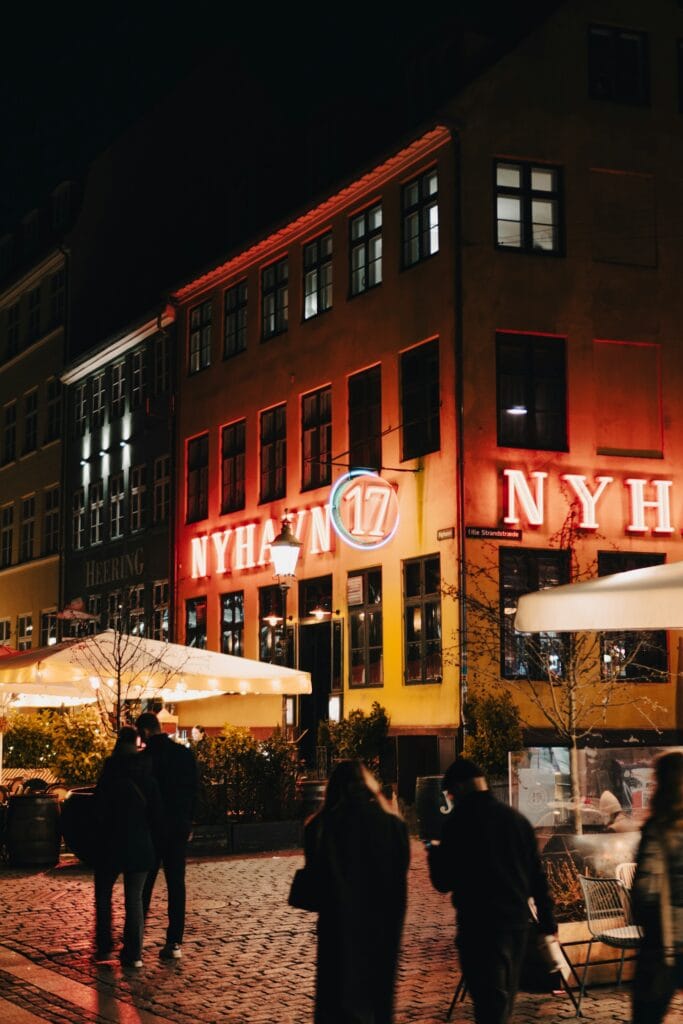
Nyhavn is the postcard, but it is more useful as a timing lesson. Arrive before 8:30 am, when the water is still, and the terrace chairs are empty, and you understand immediately what pace this city rewards. Cycling is not an add-on here; Copenhagen has more bikes than residents, and 68% of hotel rooms already hold an eco-certification. Hotel Guldsmeden, Green Key certified, runs around DKK 1,100–2,200/night. For a less polished and more useful version of the city, head to Amagerbro; quiet streets, independent cafés, neighbourhood bakeries, and none of Nyhavn’s crowd pressure.
How to get there: Direct flights from most European hubs. Once in the city, Donkey Republic bikes from DKK 49/hour handle most urban transport. Best time: Late October and January for lower prices; late November to mid-December for the Christmas market season.
02. Tivoli Gardens in Winter, Copenhagen
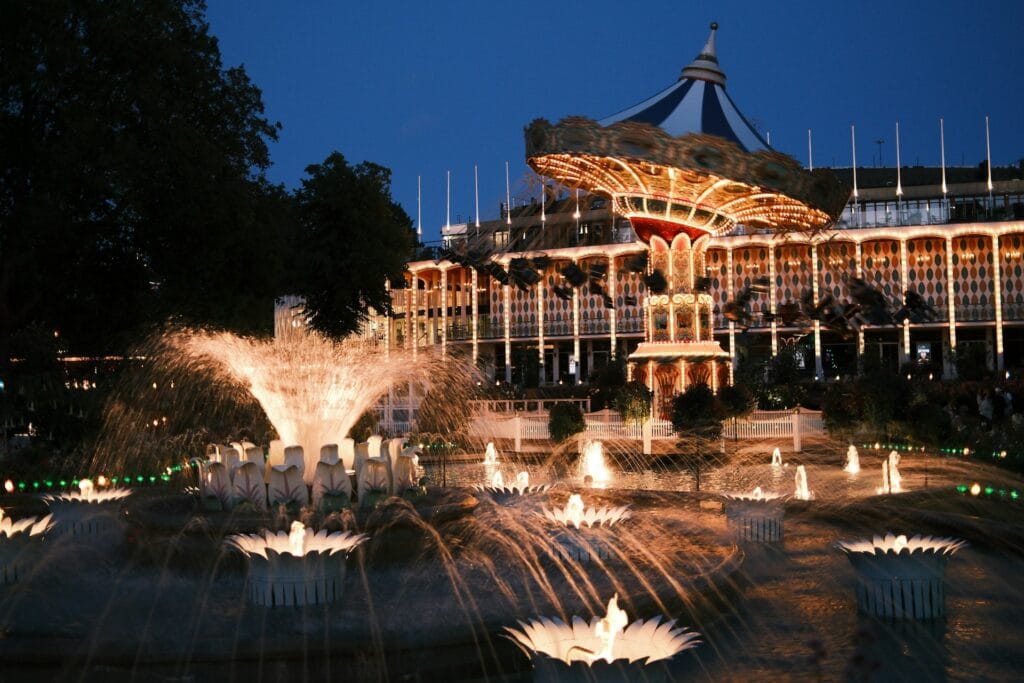
Tivoli in summer is a famous attraction. Tivoli from late November through late December is a proper hygge scene: mulled wine (glögg) from wooden market stalls, fairy lights through century-old gardens, ice skating, Nordic food, and a 19th-century carousel operating in the cold. Entry runs around DKK 145/adult. The winter market is one of the most concentrated seasonal expressions of hygge in the city, and it is also one of the easiest to reach without adding friction; Tivoli is a three-minute walk from Copenhagen Central Station.
How to get there: Copenhagen Central Station, three minutes on foot.Best time: Late November through 23 December. Avoid the final weekends before Christmas if you want lower crowd density.
03. Odense and the Castle Coast, Denmark
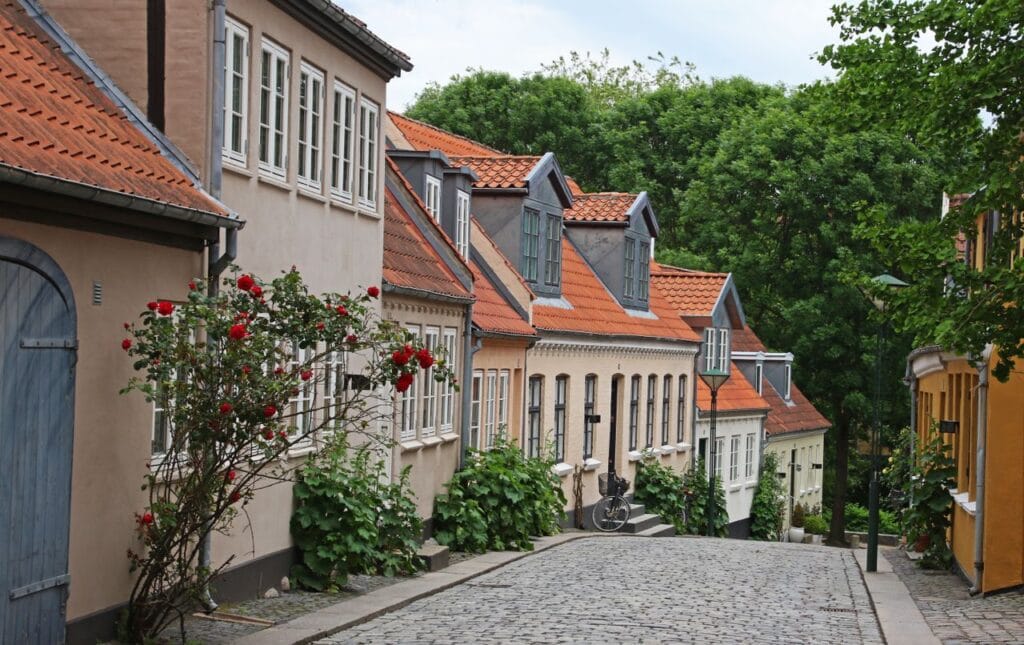
Odense runs at a pace Copenhagen visitors rarely find. Hans Christian Andersen’s hometown has cobblestone streets, hidden cafés, and enough quiet to justify staying longer than a lunch stop. The Hans Christian Andersen Museum costs around DKK 175/adult and is worth a half-day on its own. For a separate rail day, North Zealand’s Castle Coast is the more strategic choice: Kronborg Castle in Helsingør, Frederiksborg Castle in Hillerød, and the café-lined old town streets around them all work in one loop without needing a car or a hotel change.
How to get there: DSB regional rail from Copenhagen Central. Odense is about 1 hour 30 minutes; Hillerød is about 1 hour; Helsingør is about 45 minutes. Best time: Spring and autumn for lighter tourist density. The Castle Coast works well in any season.
04. Oslo Floating Saunas, Norway
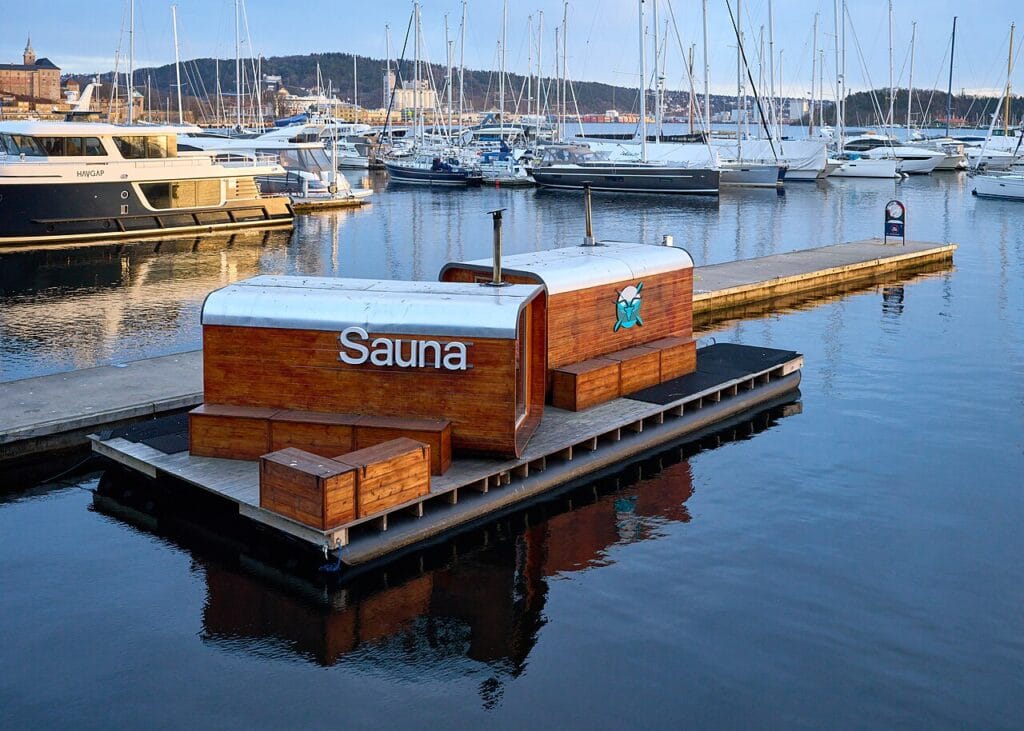
KOK Oslo’s wood-fired floating saunas on the Oslo Fjord are one of the few paid experiences in Scandinavia that fully justify the hype. The rhythm is simple: heat to 80–90°C, then step directly into the cold fjord water. Sessions usually cost NOK 450–650/person, and winter weekends book out well ahead. This is not passive relaxation. The cold is real, the warmth is earned, and that contrast is exactly why it works. If the trip is short, stay near Oslo S so you are not spending that recovered calm on transfers.
How to get there: Oslo is connected by direct flight from most major European cities, and by SJ rail from Stockholm.Best time: November through February for the strongest cold-water contrast.
05. Norwegian Fjords
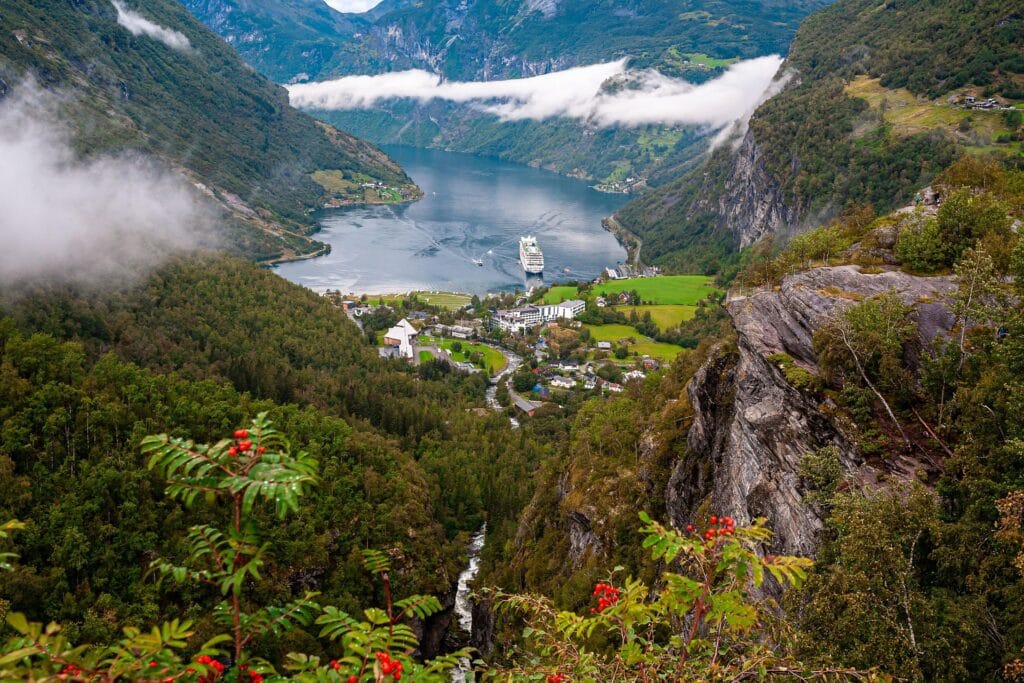
The fjords deliver a different form of hygge; less candlelight, more scale and silence. Bergen is the practical gateway. The Bergen Railway from Oslo starts around NOK 599 booked early, crosses the Hardangervidda plateau, and remains one of Europe’s best rail journeys. Route comparisons put the train at roughly 3.5 kg CO₂ per passenger versus about 50 kg by air on the same route. Geirangerfjord, Nærøyfjord, and Hardangerfjord all reward travellers who are willing to spend a full day moving slowly through one landscape instead of trying to stack three destinations in an afternoon.
How to get there: Bergen Railway via vy.no; onward fjord access from Bergen or Flåm.Best time: May and June for waterfalls and long daylight; September and October for autumn colour and lower prices.
06. Stockholm and the Fika Ritual, Sweden
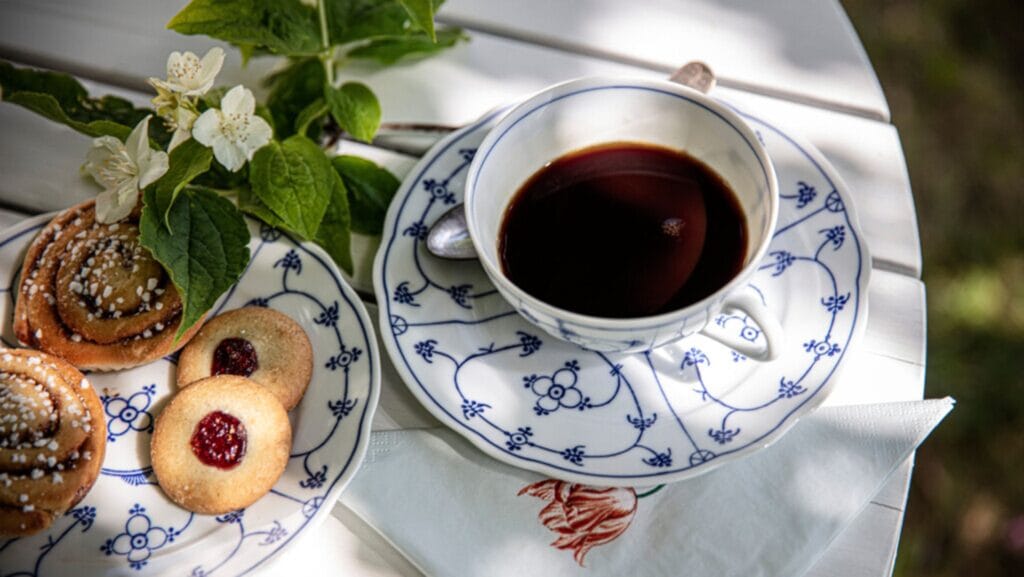
Stockholm brings hygge into a more urban, design-led register. The city’s key contribution is fika; the Swedish practice of a deliberate mid-day coffee break with a pastry, taken for pause rather than productivity. Rosendals Trädgård in Djurgården is one of the best places to do it properly: a KRAV-certified biodynamic garden café where coffee and a bun cost about SEK 85. In late November and December, Skansen shifts into winter-market mode with wooden stalls, candles, and seasonal food that actually enhances the atmosphere rather than selling it.
How to get there:SJ high-speed train from Copenhagen or Oslo.Best time: Late November through December for Skansen’s winter market; late May through June for outdoor café culture and long evening light.
How to Build a Hygge Travel Guide Into a Real Trip

Move through Scandinavia at ground level
- Start Copenhagen on a Donkey Republic bike, not in a taxi. Rentals start at DKK 49/hour (~€6.50), which is usually cheaper than one short taxi ride into the centre. It also fits the city properly; you see bakery queues, canal edges, and residential streets that disappear entirely when every move happens by car.
- Use one DSB regional rail day trip instead of adding another hotel change. Copenhagen to Helsingør or Hillerød returns from roughly DKK 100 (~€13), and both give you Kronborg Castle, Frederiksborg Castle, and café stops without dragging luggage around. That is a better fit for the pace than checking in and out for a single night.
- Make one flagship rail leg the centrepiece of the trip. The Bergen Railway from Oslo to Bergen starts at around NOK 599 (~€52) booked in advance on vy.no. It is one of the most scenic rail journeys in northern Europe. Route comparison tools put the rail trip at roughly 3.5 kg CO₂ per passenger versus approximately 50 kg for the same route by air; a 93% reduction.
- Use an Interrail pass only if you have at least three paid rail days. The mobile pass starts at around EUR 169 for four travel days, which can work well for a Copenhagen–Stockholm–Oslo route. If your plan is Copenhagen plus one side trip, point-to-point DSB or SJ tickets are usually cheaper.
Book rooms for warmth, not for bragging rights
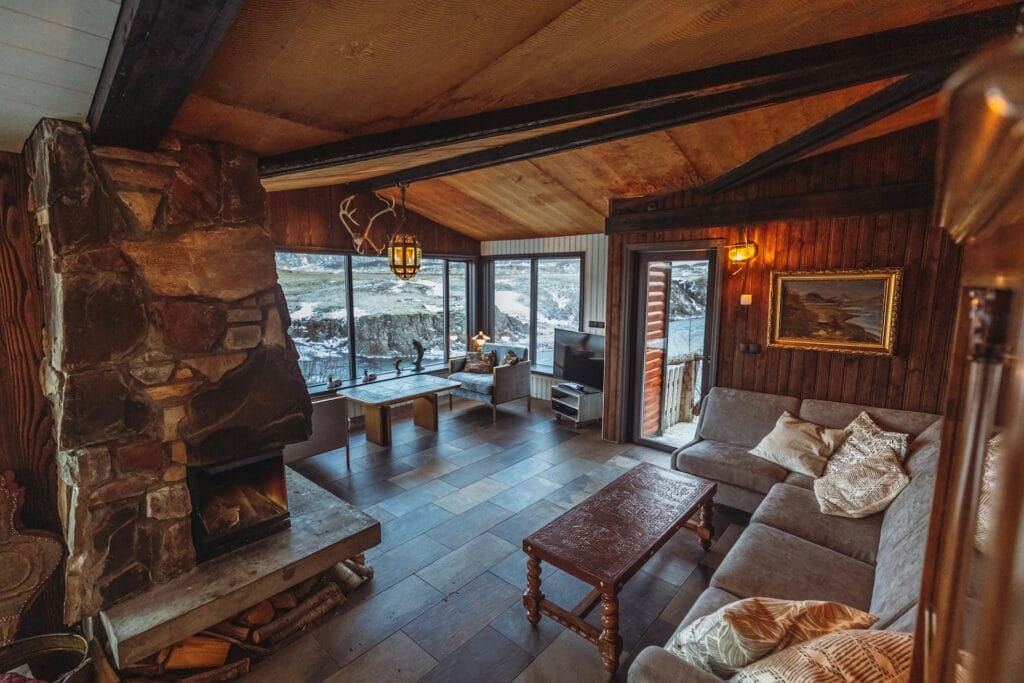
- Filter for verified certification first, then look at interior photos. Green Key and Nordic Swan Ecolabel are the two labels worth checking. Green Key, managed by the Foundation for Environmental Education (FEE) ; requires third-party on-site audits across 100+ criteria covering energy use, water consumption, waste management, procurement, and staff practice. Nordic Swan applies equivalent criteria to properties across Sweden and Norway. Both are verifiable at greenkey. global and svanen.se before you touch a booking platform.
- In Copenhagen, Hotel Guldsmeden holds Green Key certification and runs through the brief well. Rates typically sit around DKK 1,100–2,200/night (~€147–295) depending on season. The scale is right; natural materials, low lighting, textiles, and it is within walking distance of central neighbourhoods.
- For a forest reset in Sweden, consider Trakt Forest Hotel in Småland. Cabins start from SEK 6,200/night (~€545) and sleep two to four people. The property runs a farm-to-table restaurant sourcing directly from local producers and the surrounding forest. Before booking any Swedish forest retreat, verify Nordic Swan Ecolabel status directly at svanen.se rather than taking eco language at face value.
- In Oslo and Stockholm, choose station-adjacent accommodation if the trip is short. A room near Oslo S or Stockholm Central removes transfers and saves enough time and taxi spend to justify a slightly higher nightly rate.
Eat and pause on purpose
- Build one long lunch into every full day. In Copenhagen, Café Sorgenfri, open since 1797, is a reliable stop for smørrebrød (open-faced rye sandwiches), with mains around DKK 150–250 (~€20–33). The food matters, but the schedule matters more. Book the meal for 1 pm, keep the afternoon loose, and stop treating every museum opening hour as a deadline.
- Use fika as a fixed planning block, not something you squeeze into a connection. Fika is the Swedish practice of a deliberate mid-day coffee break with a pastry; not taken for caffeine, but for presence, reflection, and a genuine pause. At Rosendals Trädgård in Stockholm, coffee and a bun run about SEK 85 (~€7.50). When shopping at Swedish market stalls, look for the KRAV label, Sweden’s organic certification standard, on food products.
- Pack two practical items that make cold-weather slow travel easier. A Klean Kanteen insulated bottle (budget EUR 35–45) and a merino mid-layer from Devold or Dilling (budget EUR 70–120). Both reduce impulse purchases and extend your comfortable walking range.
Spend on one anchor experience, then stop adding extras
- Pick one memorable paid experience per city and leave the rest unscheduled. In Oslo, a KOK floating sauna session on the Oslo Fjord costs NOK 450–650/person (~€38–55). In Stockholm, Skansen is the anchor winter option. In Copenhagen, Tivoli Gardens works if the trip overlaps with the market season. One per city is enough; the rest of hygge comes from pacing, not ticket volume.
- Keep one unbooked half-day in every three-day block. That time is for rain, fatigue, a late train, or simply staying longer somewhere that turned out to be better than expected.
- Match the geography to your actual annual leave. Five to seven days is enough for Copenhagen plus one rail branch: North Zealand, Odense, or Malmö and Stockholm. Ten to fourteen days is the minimum for Denmark, Norway, and Sweden to feel enjoyable rather than frantic.
The Honest Trade-Offs
This style of trip is rarely the cheapest version of Scandinavia. Green Key certified mid-range hotels in Copenhagen typically cost 10–25% more than equivalent uncertified chain rooms. A non-certified hostel bed can be found for DKK 250–400/night (~€33–54); a Green Key mid-range hotel starts around DKK 900–1,100/night (~€120–148).
Rail is not always cheaper than flying. A Copenhagen–Stockholm flight appears regularly at EUR 40–70 on sale. The same route by SJ high-speed train runs 4.5–5 hours and costs EUR 60–140 depending on lead time. You pay more and travel slower. What you recover is centre-to-centre arrival, no airport transfer, and a journey you can actually use.
The biggest honest obstacle is annual leave. A three-country hygge route with surface transport needs 10–14 days minimum. For travelers with five to seven days, the right call is to shrink the map rather than pretend you can do Copenhagen, Oslo, Bergen, and Stockholm without every day becoming a logistics exercise.
Practical Planning Tools & Resources
| Tool / Resource | What It Does | Free or Paid | URL |
| Interrail / Eurail | Multi-country Scandinavia rail pass covering DSB, SJ, and Vy | Paid (from EUR 169 / 4 days) | interrail.eu |
| DSB | Book floating sauna sessions on the Oslo Fjord | Free to search, paid to book | dsb.dk |
| SJ | Danish national rail; Copenhagen to Odense, Aarhus, Helsingør | Free to search, paid to book | sj.se |
| Vy | Swedish high-speed rail: Stockholm routes and connections | Free to search, paid to book | vy.no |
| Green Key Global | Search and verify Green Key certified properties by country | Free | greenkey.global |
| Nordic Swan Ecolabel | Verify Nordic Swan certified accommodation in Sweden and Norway | Free | svanen.se |
| EcoPassenger | Compare CO₂ emissions across train, flight, and car per route | Free | ecopassenger.org |
| Donkey Republic | Bike rental across Copenhagen and 80+ European cities | Paid (from DKK 49/hour) | donkeyrepublic.com |
| KOK Oslo | Book floating sauna sessions on Oslo Fjord | Paid (NOK 450–650/session) | kokoslo.no |
| KRAV | Verify Swedish organic and sustainable food certifications | Free | krav.se |
Quick Reference Summary
| Action | Impact Level | Difficulty |
| Limit the trip to two main bases if annual leave is under 8 days | 🔴 High | Requires planning |
| Book Green Key or Nordic Swan certified accommodation | 🔴 High | Easy |
| Travel in October, January, or late May to avoid peak pricing and crowds | 🔴 High | Easy |
| Carry Klean Kanteen bottle and a merino layer to reduce on-trip purchases | 🔴 High | Moderate |
| Use DSB day train to Castle Coast instead of renting a car | 🟡 Medium | Easy |
| Rent a Donkey Republic bike as primary Copenhagen transport | 🟡 Medium | Easy |
| Build one fika block or long lunch into every full day | 🟡 Medium | Easy |
| Look for KRAV-certified food at Swedish market stalls | 🟢 Low | Easy |
| Verify hotel eco-certification at greenkey. global before booking | 🟢 Low | Easy |
| Verify hotel eco-certification at greenkey.global before booking | 🔴 High | Easy |
Frequently Asked Questions
How many days do you actually need?
Five to seven days is enough if the route stays narrow. Copenhagen plus one rail extension ; North Zealand, Odense, or Stockholm ; is realistic and results in a genuinely good trip. Ten to fourteen days is the minimum for a Denmark–Norway–Sweden loop to feel enjoyable rather than pressured.
Are Green Key hotels worth paying a premium for?
Usually yes, if the gap is moderate. The practical benefit is not only lower resource use inside the building. Green Key certified properties have passed third-party on-site audits covering energy, water, waste, procurement, cleaning systems, and staff training. If the certified room is significantly above budget, use greenkey.global to find a lower-cost certified option in the same neighbourhood.
Is taking the train always cheaper than flying in Scandinavia?
No. Short-haul sale fares regularly beat rail on headline price. Rail wins on centre-to-centre arrival, journey usability, and significantly lower emissions. The decision should include time quality and transfer stress, not ticket price alone.
Can this style of trip work on a modest budget?
Yes, with specific trade-offs. Use one base for several nights to reduce hotel-change costs. Book apartments or guesthouses near a train station rather than boutique hotels. Spend selectively on one anchor experience per city and leave the rest of the days unstructured.
What is the best first stop for a hygge trip?
Copenhagen is the clearest answer. It is compact, has a strong bike network, high café density, and strong certified accommodation options. It also connects well by rail to Odense, Helsingør, Hillerød, Malmö, and Stockholm.
How do you verify an accommodation’s eco claim without guessing?
Search the certification body directly before touching a booking platform. Go to greenkey.global or svanen.se, enter the property name, and confirm active certification status. If a hotel uses vague language like “green” or “eco-conscious” without naming a specific standard, treat it as unverified marketing until proven otherwise.
The Bottom Line
Before you open a flight search, go to greenkey. global, search Copenhagen, and shortlist three certified hotels in neighbourhoods you would actually enjoy walking through after dark. Then open ecopassenger.org, enter your inbound route, and look at the emissions number between rail and air. If the train takes under six hours, the case for taking it is difficult to argue against.
One more thing: pick your season before you pick your dates. October, January, and late May each offer a version of this trip that is meaningfully different in atmosphere and noticeably cheaper than peak December or July. Knowing which version you want determines almost every other booking decision that follows. For detailed next steps, read our guide to low-carbon European rail routes and our how to choose a Green Key certified hotel.
Research & Verification Note
This article was last verified in June 2026. Hotel prices, rail fares, certification statuses, exchange rates, opening hours, and entry fees change regularly — confirm directly with the operator or property before booking. CO₂ emissions figures for train versus air comparisons are directional planning numbers based on published route data and the EcoPassenger comparison tool; exact results vary by load factor, aircraft type, and national electricity grid mix.
Sources Used in This Article
- greenkey.global — Green Key certification database and property search
- svanen.se — Nordic Swan Ecolabel — verify certified accommodation in Sweden and Norway
- dsb.dk — Danish national rail fares and schedules
- sj.se — Swedish rail fares and schedules
- vy.no — Norwegian national rail, Bergen Railway booking
- ecopassenger.org — European route CO₂ emissions comparison
- wonderfulcopenhagen.com — Copenhagen hotel eco-certification statistics
- guldsmedenhotels.com — Green Key certification details for Guldsmeden properties
- kokoslo.no — KOK Oslo floating sauna pricing and bookings
- krav.se — Swedish organic food certification information
- thespaces.com — Trakt Forest Hotel, Småland, Sweden
- en.unwto-ap.org — UN Tourism World Tourism Barometer, January 2025
- wttc.org — WTTC travel sector emissions data 2023
- sciencedirect.com — Journal of Cleaner Production — night train modal shift and carbon reduction study
- visitcopenhagen.com — Copenhagen official tourism
- visitdenmark.com — VisitDenmark hygge and lifestyle guide
- kronborg.dk — Kronborg Castle entry fees and opening hours
- dnm.dk — Frederiksborg Castle / Museum of National History
- visitoslo.com — Oslo official tourism
- visitbergen.com — Bergen official tourism and Bergen Railway travel information
- visitsweden.com — Sweden official tourism and fika culture
- visitstockholm.com — Stockholm official tourism
- rosendalsradgard.se — Rosendals Trädgård — KRAV-certified biodynamic garden café, Djurgården, Stockholm
- skansen.se — Skansen open-air museum and seasonal market information
Additional Sources for Trip Planning
- visitnorway.com — Norway official tourism, fjord and wellness experiences
- eea.europa.eu — European Environment Agency — transport emissions data
- travelandclimate.org — Train vs flight CO₂ comparison methodology